π What is Encryption?
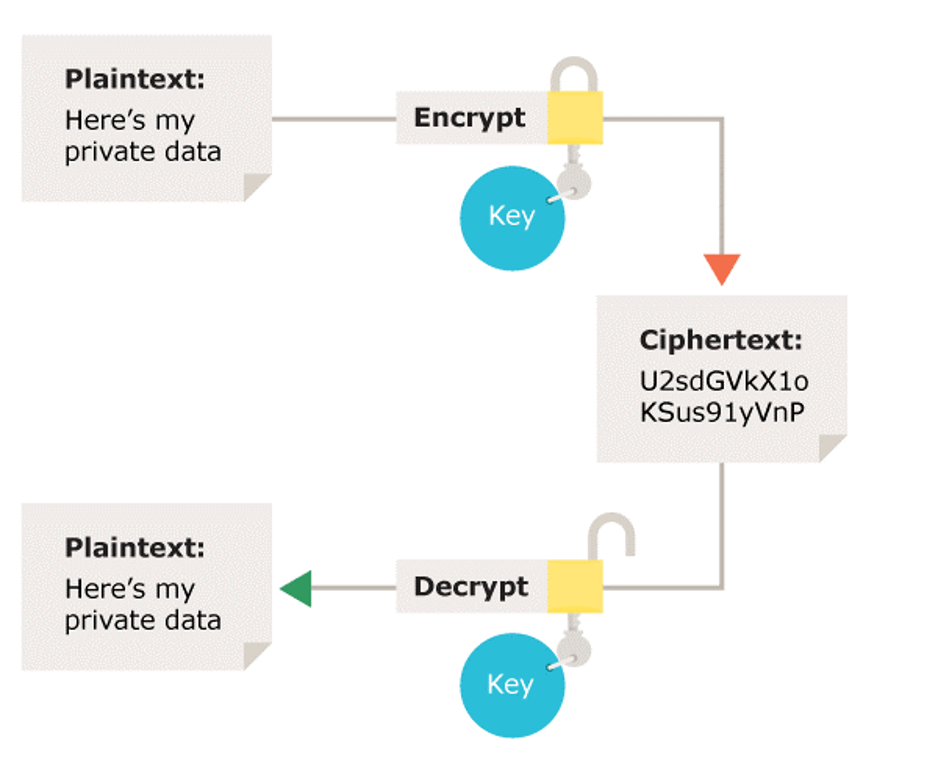
Encryption is the process of transforming readable data (plaintext) into an unreadable form (ciphertext) using algorithms and secret keys. Think of it as locking your information in a digital vault β only someone with the right key can unlock it.
Example:
Original Message: βHelloβ
Encrypted Message: βXy@#12!β
Only someone with the key can turn βXy@#12!β back into βHelloβ.
π‘ Why Do We Need Encryption?
Privacy: Protects personal info like passwords, messages, and bank details.
Secure Transmission: Prevents hackers from reading data sent over the internet.
Data Safety: Makes stolen or hacked data useless without the decryption key.
π Types of Encryption
π Symmetric Encryption
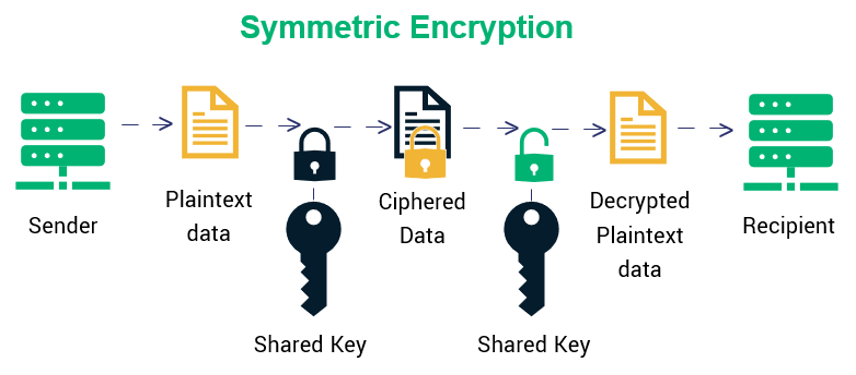
[Image Placeholder: Two people sharing the same key icon]
Uses the same key for encryption and decryption.
Requires both parties to share a secret key.
β Popular Algorithms:
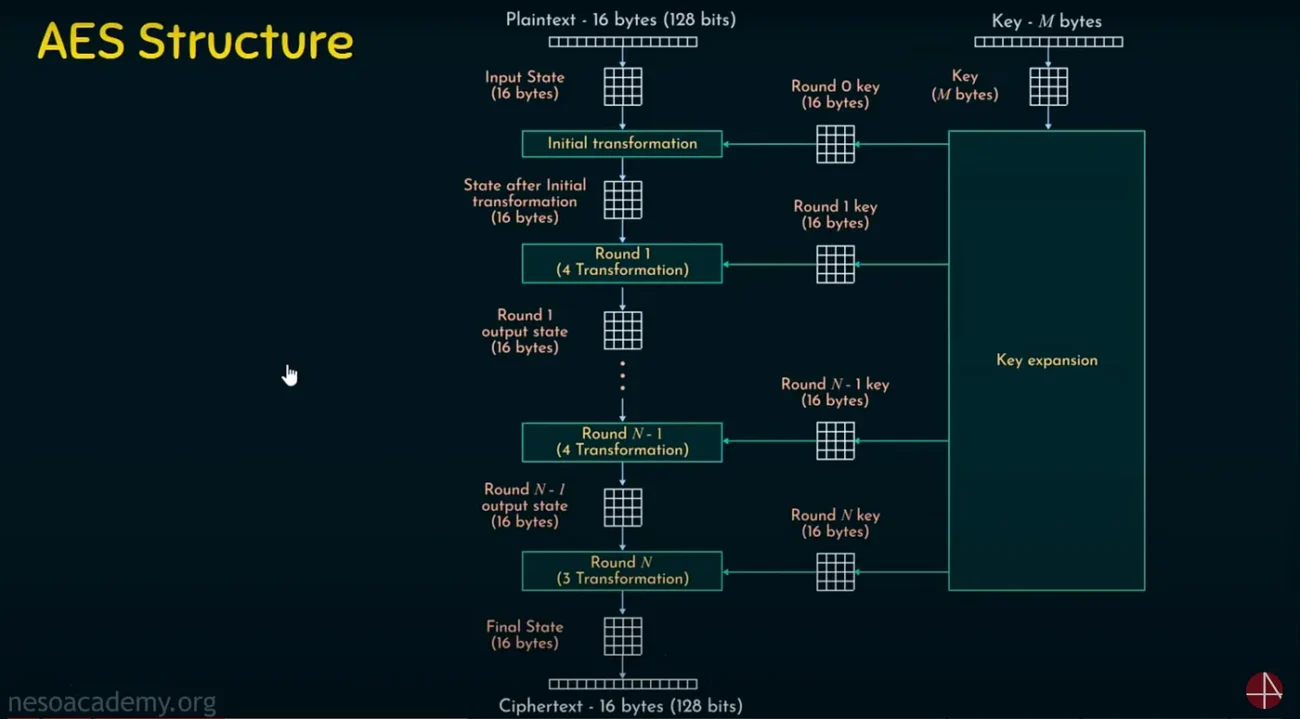
πΈ AES (Advanced Encryption Standard)
Block Size: 128 bits
Key Sizes: 128, 192, or 256 bits
Used in: WhatsApp, VPNs, online banking
Strengths: Fast, secure, and globally trusted
Weakness: Requires secure key sharing
πΈ DES (Data Encryption Standard)
Β
Block Size: 64 bits
Key Size: 56 bits
Used in: Older systems
Weakness: Can be cracked in hours β obsolete today
πΈ 3DES (Triple DES)
Applies DES three times
Key Size: 112 or 168 bits
Used in: Banking (historically)
Weakness: Slower and outdated
πΈ RC4 (Rivest Cipher 4)
Type: Stream Cipher
Key Size: 40β2048 bits
Strengths: Fast, easy to implement
Weakness: Vulnerable β no longer secure
πΈ RC5 & RC6
Block Sizes: 32β128 bits
Key Sizes: up to 2040 bits
Strengths: Flexible, fast
RC6 was a finalist in the AES competition
Weaknesses: Not widely adopted, less tested