
What Is a Tattoo Font Application?
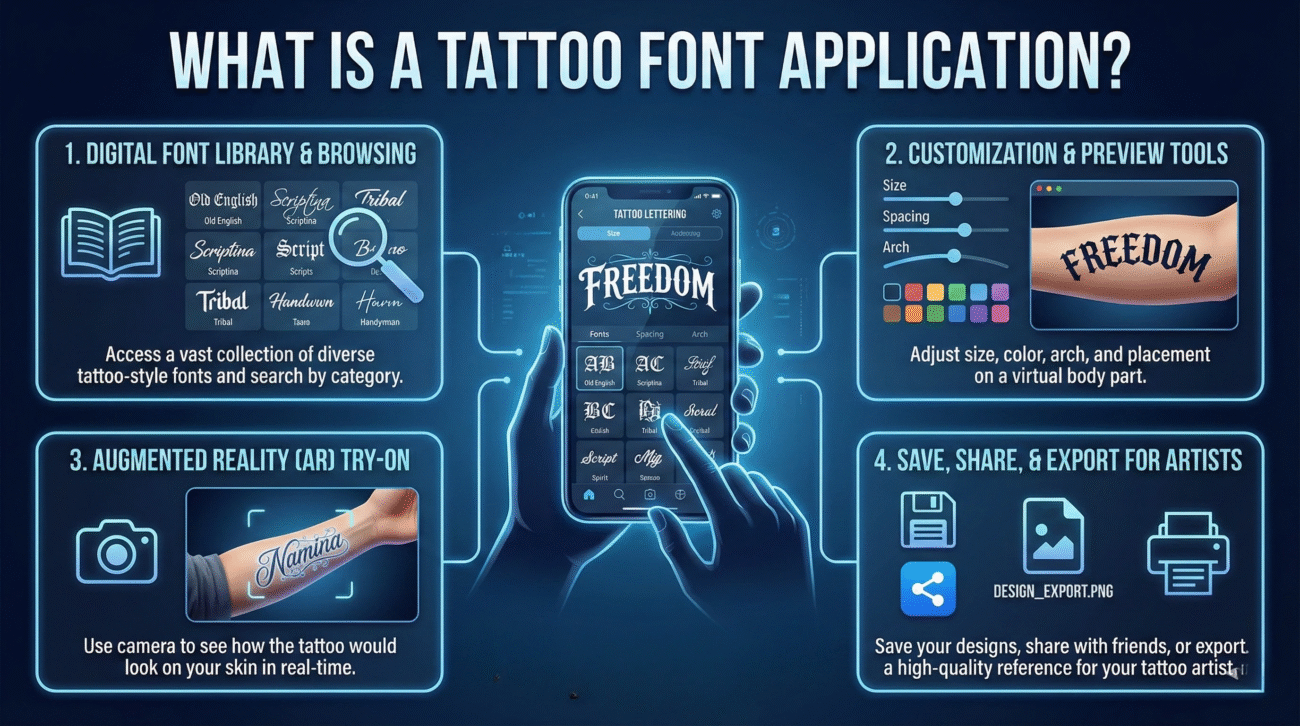
A tattoo font application is a digital tool that allows users to explore, design, and visualize text-based tattoo ideas using a wide range of fonts and customization options. Whether someone wants a name tattoo, a meaningful quote, roman numerals, calligraphy letters, or gothic-style designs, these applications provide instant previews in multiple styles. They bridge the gap between imagination and final tattoo outcome by helping artists and clients collaborate and refine designs before inking.
These apps typically include font browsing, text editing, skin preview modes, image saving, and export options. Advanced versions even support 3D body mapping, AI-powered suggestions, and augmented reality previews.
Why Tattoo Font Applications Are Becoming Popular
1. Rising Demand for Personalized and Meaningful Tattoos
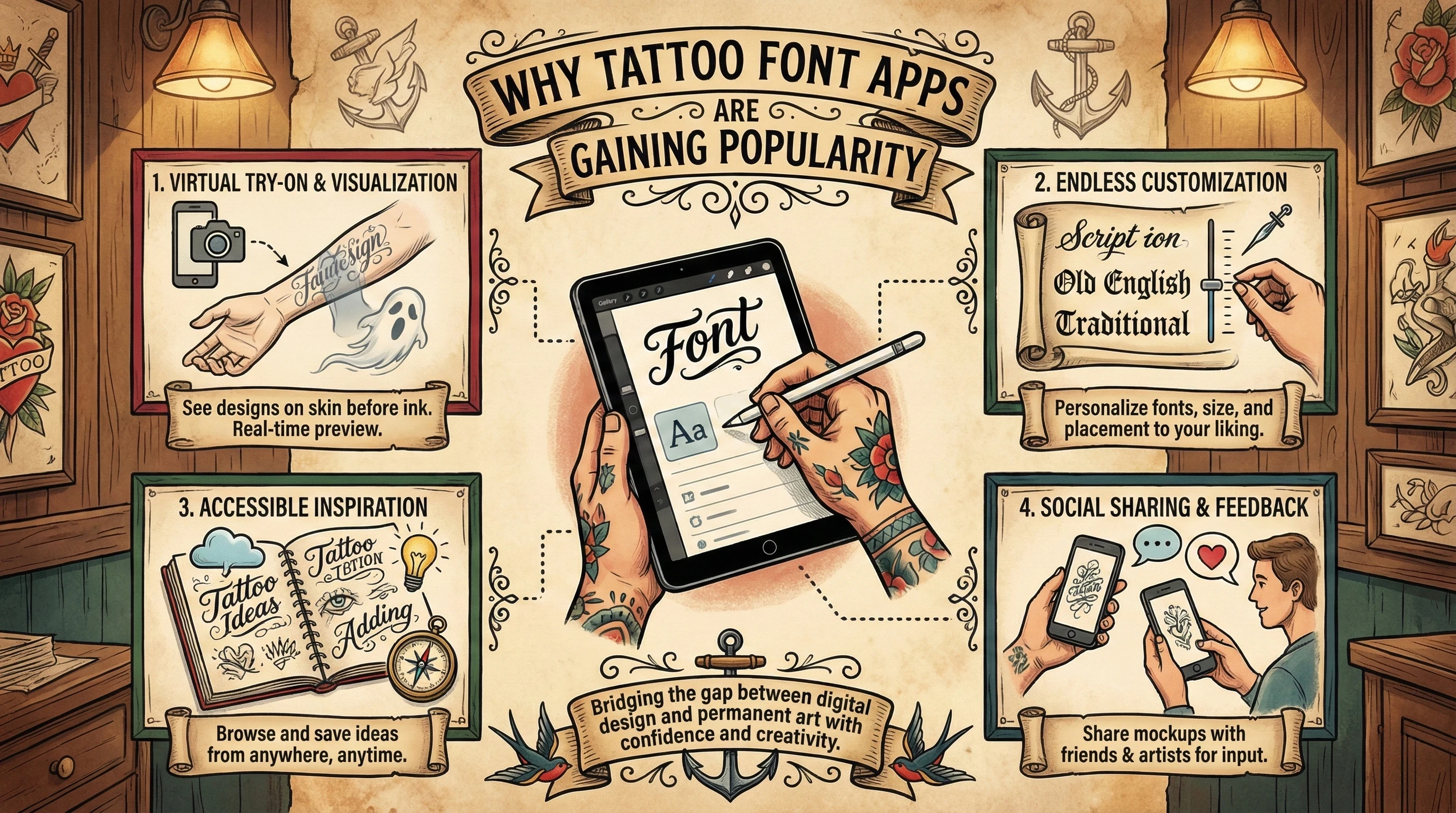
In today’s tattoo culture, people are no longer interested in generic or pre-designed templates—they want tattoos that reflect their personality, emotions, and life experiences. Lettering tattoos like names, quotes, initials, and meaningful dates have become extremely popular because they carry emotional significance. Tattoo font applications allow users to experiment with customized styles and shapes, helping them create unique designs that truly resonate with their stories. This demand for personalization is one of the biggest reasons behind the growth of tattoo font apps.
2. Easy Visualization Before a Permanent Decision
A tattoo is permanent, and most people feel anxious about choosing the wrong design. Tattoo font applications eliminate this fear by offering realistic previews through digital mockups, skin backgrounds, and even augmented reality (AR). Users can instantly see how a name, phrase, or date would appear on different body parts—like the wrist, shoulder, collarbone, or forearm—before making any commitment. This visual clarity boosts confidence, reduces design-related regrets, and helps users finalize tattoos without hesitation.
3. Thousands of Creative Fonts at One Place
A big advantage of tattoo font applications is the massive collection of professionally designed fonts that users can access instantly. Without these apps, finding tattoo-friendly fonts online involves scrolling through hundreds of unrelated styles, downloading files, and trying them manually. Tattoo font apps simplify this by offering curated categories such as gothic, calligraphy, cursive, bold, tribal, handwritten, vintage, minimalistic, and more. This variety inspires creativity and helps users explore endless possibilities that would be nearly impossible to find manually.
4. Improved Collaboration Between Tattoo Artists and Clients
Before the rise of tattoo font apps, clients often explained what they wanted verbally, leaving room for misunderstandings during the tattoo sketching stage. With digital tools, clients can bring ready-made mockups, screenshots, or saved designs to their artists, making communication clear and efficient. Tattoo artists also use these apps to quickly demonstrate different font options, spacing, and alignments during consultations. This real-time collaboration builds trust, prevents miscommunication, and ensures better results for both sides.
5. Saves Significant Time for Artists and Studios
Tattoo artists usually spend hours sketching multiple variations of lettering styles for different clients. Tattoo font applications automate this process by generating clean, professional-looking text instantly. Artists can quickly experiment with curves, spacing, and effects without redrawing everything manually. This allows them to handle more clients, speed up appointment times, and reduce consultation workload—making the entire tattooing workflow more productive and efficient.
6. Growing Influence of Social Media & Aesthetic Trends
Platforms like Instagram, Pinterest, and TikTok have influenced the rise of aesthetic tattoos, such as minimalist quotes, cursive initials, and fine-line lettering. Tattoo font applications allow users to recreate trending styles easily, experiment with viral fonts, and generate content-worthy designs. Many people use these apps to create tattoo mockups for their social media feeds, further increasing their popularity and visibility. The digital generation loves customizing and sharing creative ideas, and tattoo font apps fit perfectly into this trend.
7. AR & 3D Visualization Making Design More Realistic
Modern tattoo font apps now include advanced augmented reality (AR) features, allowing users to virtually “try on” tattoos using their phone cameras. This makes the experience fun, interactive, and incredibly realistic. Some apps also provide 3D body models where letters wrap naturally around curves, muscles, and angles. These technologies bring the tattoo design process to life, making it more engaging and eliminating guesswork for users.
8. Accessibility for Beginners and Non-Artists
Not everyone has the drawing skills or design experience needed to create beautiful lettering tattoos. Tattoo font applications empower beginners by offering pre-made templates, simple editing tools, and one-tap font previews. Users can design professional-quality tattoos without any artistic background. This convenience has expanded the tattoo design space beyond studios—anyone can now create their dream tattoo at home in minutes.
9. Cost-Effective Alternative to Professional Designers
Hiring a graphic designer or requesting custom lettering from a tattoo artist can be costly, especially for people planning small tattoos. Tattoo font applications provide a low-cost or even free solution that delivers high-quality designs. Premium apps also offer affordable subscription plans that cost far less than custom artwork fees. This budget-friendly accessibility attracts millions of users who want beautiful tattoo fonts without spending extra money.
10. Constant Innovation and New Features
Tattoo font apps are continuously improving, adding features like AI-generated fonts, healing simulators, skin tone customization, and multi-layer editing. These innovations keep the apps exciting, advanced, and relevant in the digital age. Users return frequently to explore new designs, experiment with fresh styles, and try emerging tattoo trends. This continuous evolution plays a critical role in their rising popularity.
Key Features of a Tattoo Font Application
1. Huge Library of Tattoo Fonts
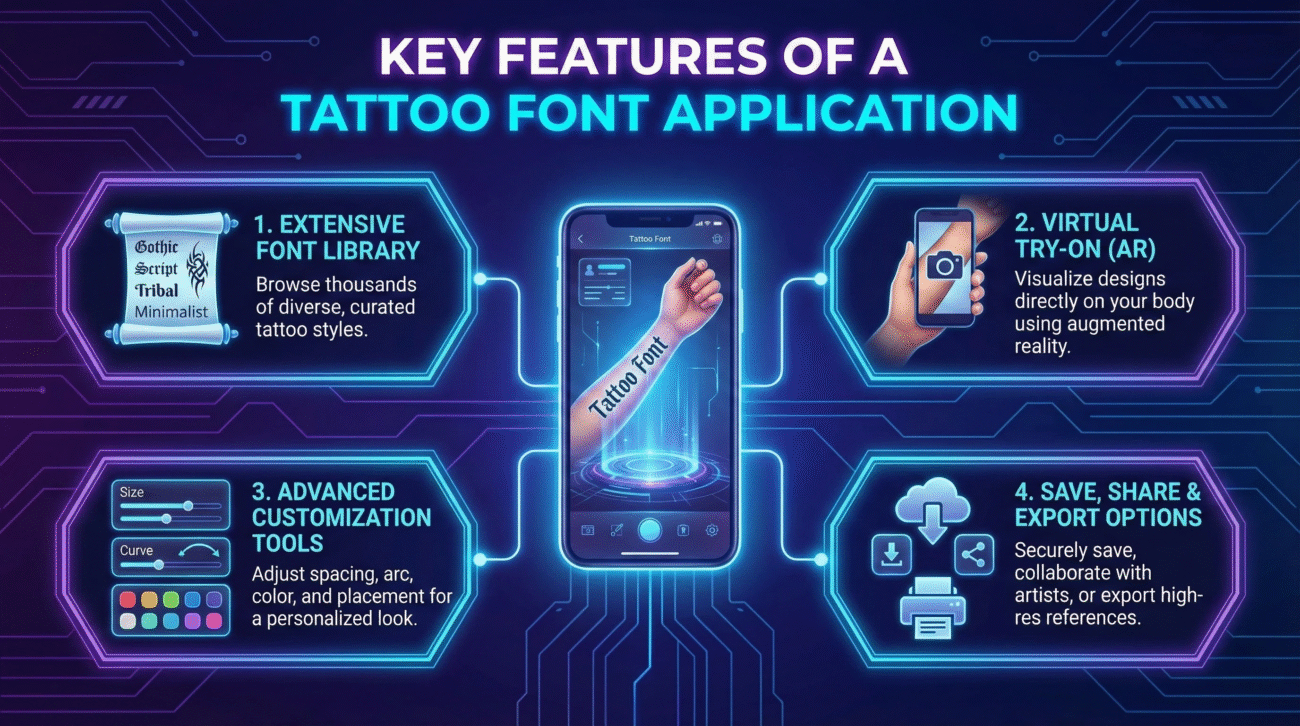
A tattoo font application provides users with an extensive library of professionally crafted fonts, often ranging from hundreds to thousands of unique styles. These include calligraphy fonts for elegant scripts, cursive and handwritten fonts for personal touches, gothic and tribal fonts for bold statements, and minimalist or typewriter fonts for clean, modern looks. This wide selection allows users to experiment freely with different moods and vibes until they find the perfect style for their tattoo. Such variety inspires creativity and ensures that users can match their tattoo design to their personal identity or the meaning behind their chosen word or phrase.
2. Custom Text Editor
The custom text editor is one of the core components of a tattoo font application, enabling users to type names, dates, quotes, initials, or any custom text directly within the app. With features like resizing, bolding, italicizing, rotating, letter spacing, line spacing, and alignment tools, users gain complete control over how their tattoo looks. They can experiment with different text arrangements, curves, or angles to craft a layout that feels perfect for their chosen body placement. This level of customization helps users create a tattoo design that feels personal and unique.
3. Realistic Skin Preview
A realistic skin preview option allows users to visualize how their chosen tattoo will appear on actual skin tones and body parts such as arms, shoulders, wrists, legs, or the back. This feature simulates the texture and color of real skin, giving users a much clearer idea of the tattoo’s final appearance. By seeing the design directly on a model or body map, users gain confidence in their choices and can make more informed decisions about size, placement, and styling before they visit a tattoo studio.
4. Augmented Reality (AR) Placement
Many advanced tattoo font applications offer AR-powered visualization tools that allow users to “try on” tattoos using their smartphone camera. By pointing the camera at their body, users can see the tattoo text projected in real time, adjust its size, rotate it, or reposition it instantly. This AR preview provides an incredibly realistic and interactive experience, helping users determine the best location and orientation for their tattoo. It also reduces the chances of regretting the final placement since users see exactly how it will appear on their own skin.
5. Design Download & Sharing Options
Tattoo font applications allow users to save their completed designs in high-quality image formats for future use. These download options make it easy for users to bring the design to their tattoo appointment or store it for later. Additionally, built-in sharing tools let users send designs directly to friends, family, or tattoo artists for feedback. This enhances communication and ensures smoother collaboration before the tattooing process begins.
6. Image Import for Overlay
Some tattoo font apps include an option for users to import photos of their own body and overlay the tattoo design onto the image. This makes the preview even more personalized and accurate, helping users visualize how the tattoo will look on their actual skin. Whether it's the forearm, collarbone, rib area, or ankle, users can test various placements with precision. This feature is especially helpful for users who want a very specific or unconventional tattoo location.
7. Text Styling & Effects
To add more depth and creativity to tattoo designs, many apps offer advanced text styling options such as shadows, outlines, gradients, curve effects, 3D enhancements, glow effects, and brush-style strokes. These tools help elevate simple text into artistic tattoo-ready artwork. Whether users want a bold, dramatic finish or a soft, elegant style, these effects allow endless customization possibilities and help users create visually appealing tattoo concepts.
8. Multiple Language Support
Tattoo culture is global, and many tattoos incorporate words or phrases from different languages. Tattoo font applications often support multiple scripts such as English, Hindi, Arabic, Spanish, Japanese, Chinese, and Korean. This is essential for users who want tattoos with cultural, spiritual, or symbolic meanings. With specialized fonts for each language, users can design text tattoos that maintain authenticity, readability, and stylistic accuracy.
9. Premium Font Packs
Most tattoo font apps offer premium font packs that include exclusive, professionally designed fonts unavailable in free collections. These premium bundles often include unique calligraphy styles, luxury brush fonts, highly detailed gothic scripts, and artistic lettering made specifically for tattoos. Users who want their designs to stand out or feel more sophisticated often purchase these packs, adding a higher level of customization and originality to their tattoos.
10. AI-Powered Font Suggestions
Modern tattoo font applications are integrating artificial intelligence to help users find their ideal fonts more easily. AI analyzes user preferences such as style choices, mood, tattoo theme, or past selections, then recommends fonts that match the intention behind the tattoo. Whether a user wants something romantic, bold, minimal, vintage, spiritual, or gothic, the AI-powered suggestions help them discover designs they might not have considered otherwise. This feature enhances the user experience and simplifies decision-making.
Benefits of a Tattoo Font Application
1. Helps Users Visualize Tattoos Before Finalizing
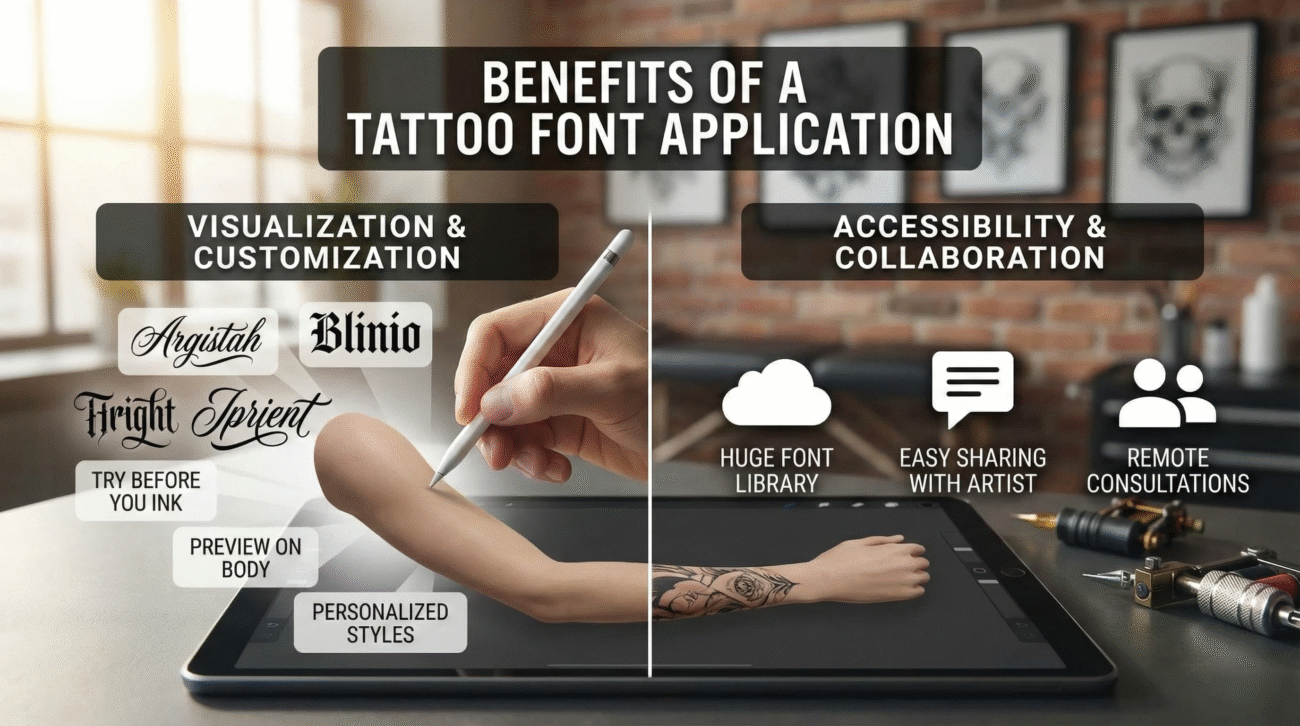
One of the most important benefits of a tattoo font application is its ability to help users visualize how their tattoo will look before committing to something permanent. Many first-time clients struggle with uncertainty—they worry whether the chosen font will suit their personality, whether the size is appropriate, or if the placement will look good on their skin. Tattoo font apps address these concerns by providing realistic previews, skin overlays, and even augmented reality try-on features. This allows users to test multiple fonts, styles, and arrangements until they find the perfect match, significantly reducing the fear of regret and helping them make confident decisions.
2. Saves Time for Tattoo Artists
Tattoo font applications also streamline the workflow for professional tattoo artists. Traditionally, artists often hand-draw multiple lettering variations during consultations, which consumes valuable time and effort. With tattoo font apps, they can instantly produce clean, professional mockups using a variety of fonts and styles. This not only speeds up the design process but also frees artists to focus more on technique, tattooing, and managing clients. Faster consultations mean more appointments can be handled in a day, improving both operational efficiency and client satisfaction.
3. Encourages Creativity & Experimentation
These applications are powerful creative tools that allow users to explore endless possibilities without limitations. Whether someone wants a simple name tattoo, a motivational quote, or a complex multi-layered design, tattoo font apps offer a wide range of fonts, effects, and styling tools to experiment with. Users can try curved text, bold statements, delicate scripts, tribal-inspired lettering, or even combine symbols and graphics. This creative freedom helps users discover new ideas they may not have imagined, making the entire design process fun, exciting, and highly personalized.
4. Reduces Mistakes & Miscommunication
Miscommunication between clients and tattoo artists is a common issue, especially when describing fonts, shapes, and layout styles verbally. A tattoo font application eliminates this problem by providing a clear visual reference that both parties can agree on beforehand. By previewing the exact style, spacing, alignment, and overall composition, the chances of mistakes or misunderstandings drop significantly. This ensures that the final tattoo matches the client’s expectations and helps artists deliver precise, accurate work that aligns perfectly with the approved design.
5. Affordable & Accessible
Tattoo font applications offer a cost-effective alternative to expensive graphic design software or hiring professional designers for custom lettering. Many apps are free or extremely affordable, making them accessible to anyone with a smartphone. Users do not need advanced design skills—they can simply pick a font, enter their text, and customize the design with intuitive tools. This accessibility empowers more people to create polished, professional-looking tattoo designs without spending additional money or relying on external artists for every iteration.
Advanced Features in Modern Tattoo Font Applications
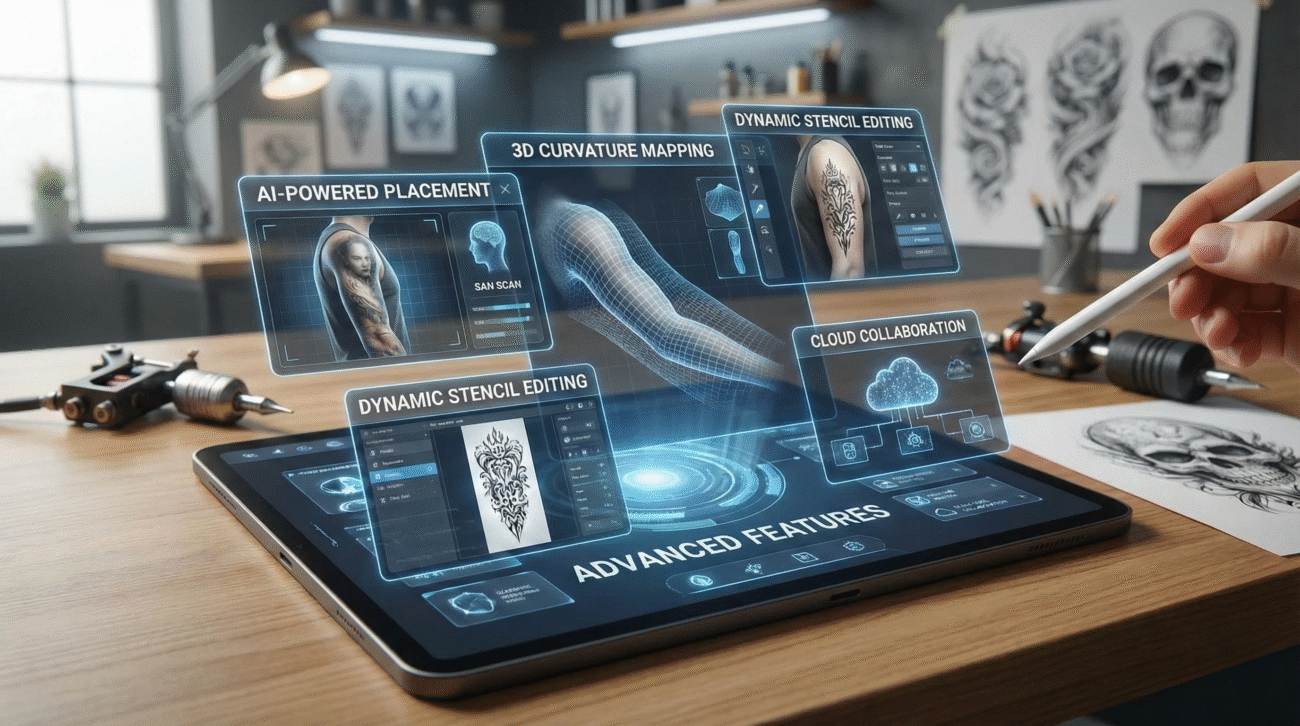
1. 3D Body Mapping
3D body mapping is one of the most innovative features offered by modern tattoo font applications. Instead of viewing tattoos on flat surfaces, users can now preview text on realistic 3D body models that mimic curves, muscles, and natural body contours. This helps users understand how their tattoo will look from different angles—whether placed on the arm, back, chest, ribs, or legs. The feature adjusts the text shape, wrapping it smoothly around curved areas, making the preview more accurate and lifelike. With 3D mapping, users avoid common mistakes such as selecting fonts that distort on curved body parts, ensuring that the final tattoo appears exactly as expected.
2. AI Style Transfer
3D body mapping is one of the most innovative features offered by modern tattoo font applications. Instead of viewing tattoos on flat surfaces, users can now preview text on realistic 3D body models that mimic curves, muscles, and natural body contours. This helps users understand how their tattoo will look from different angles—whether placed on the arm, back, chest, ribs, or legs. The feature adjusts the text shape, wrapping it smoothly around curved areas, making the preview more accurate and lifelike. With 3D mapping, users avoid common mistakes such as selecting fonts that distort on curved body parts, ensuring that the final tattoo appears exactly as expected.
3. Multi-Layer Editing
Multi-layer editing brings professional-level design capabilities into tattoo font apps, allowing users to build complex tattoo compositions by combining multiple elements. Instead of working with a single text line, users can create layered designs featuring names, quotes, symbols, mandalas, tribal patterns, angel wings, geometric lines, hearts, roses, or zodiac signs. Each layer can be individually edited, resized, rotated, or styled, giving full control over the final artwork. This feature is especially useful for tattoo enthusiasts who want to design meaningful, multi-element tattoos without using advanced graphic design software like Photoshop or Illustrator.
4. Tattoo Healing Simulator
Multi-layer editing brings professional-level design capabilities into tattoo font apps, allowing users to build complex tattoo compositions by combining multiple elements. Instead of working with a single text line, users can create layered designs featuring names, quotes, symbols, mandalas, tribal patterns, angel wings, geometric lines, hearts, roses, or zodiac signs. Each layer can be individually edited, resized, rotated, or styled, giving full control over the final artwork. This feature is especially useful for tattoo enthusiasts who want to design meaningful, multi-element tattoos without using advanced graphic design software like Photoshop or Illustrator.
5. Artist Marketplace Integration
Many modern tattoo font apps now come integrated with artist marketplaces, connecting users directly with professional tattoo artists. After designing their ideal text tattoo, users can browse portfolios, check ratings, compare pricing, and book appointments with local or international tattooists. This seamless integration creates a complete tattoo ecosystem—users design their tattoos in the app, and then instantly connect with skilled artists who can bring their ideas to life. For artists, this feature acts as a marketing tool where they can showcase their work, attract new clients, and expand their digital presence.
Who Uses Tattoo Font Applications?
1. Tattoo Enthusiasts
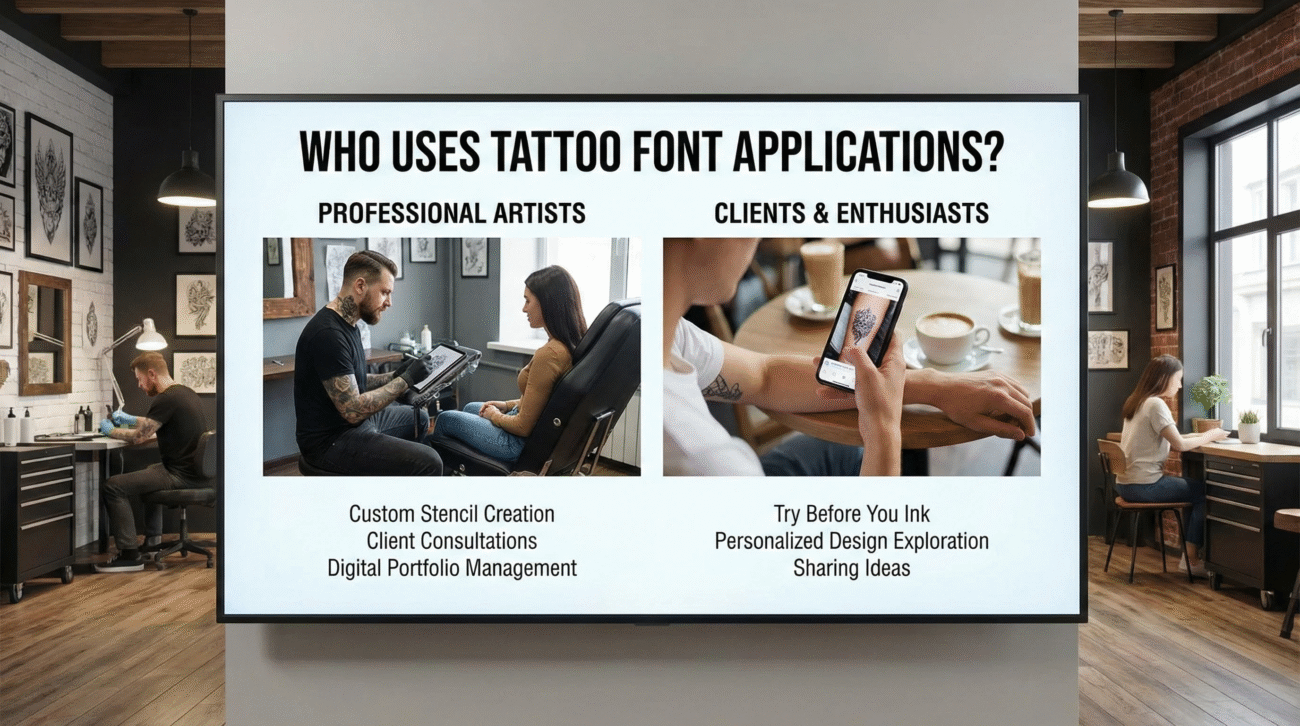
Tattoo enthusiasts are the primary users of tattoo font applications because these apps allow them to experiment freely with different lettering styles before committing to a permanent tattoo. People planning name tattoos, inspirational quotes, initials, dates, or symbolic words can test hundreds of fonts instantly, adjust sizes, and preview placements on virtual skin. This helps them overcome doubts, refine their creative ideas, and confidently finalize a design that perfectly matches their personality. For first-time tattoo clients especially, these apps reduce hesitation and offer a safe, pressure-free space to explore their aesthetic preferences.
2. Tattoo Artists
Professional tattoo artists use tattoo font applications as powerful tools during consultations with clients. Instead of drawing multiple lettering variations by hand, artists can create quick digital mockups within minutes, saving time and effort. These apps help them showcase a wide range of font styles, experiment with layouts, and explain how certain fonts will look on specific body parts. By presenting clear visual options, artists can communicate more effectively, reduce misunderstandings, and ensure the final tattoo matches the client’s expectations. This elevates the overall studio experience and improves customer satisfaction.
3. Graphic Designers
Graphic designers frequently use tattoo font applications to create tattoo-inspired typography for digital artworks, posters, logos, merchandise, album covers, and social media graphics. These apps provide access to unique lettering styles that are difficult to find in standard font libraries. Designers can easily generate tattoo-style text, apply effects, combine elements, and export high-resolution designs. The availability of gothic scripts, cursive lettering, tribal fonts, brush styles, and ornamental typography allows designers to expand their creative toolkit and produce visually striking tattoo-themed graphics.
4. Social Media Creators
Content creators on platforms like Instagram, TikTok, Pinterest, and YouTube often use tattoo font applications to produce aesthetic posts, quote designs, profile bios, and creative digital tattoos that fit modern visual trends. These apps help influencers and digital creators create stylish, tattoo-like text overlays that enhance their visuals or branding. Whether they’re creating motivational quote posts, aesthetic reels, tattoo inspiration content, or stylized captions, these apps provide quick and visually appealing solutions without needing professional design software.
5. Tattoo Studios
Tattoo studios benefit greatly from tattoo font applications because they can use them to present a digital catalog of font options to clients. Instead of relying on outdated printed font books, studios can offer an interactive, modern approach where customers browse fonts, test designs, and customize ideas on the spot. Studios can also store frequently used templates, maintain organized design libraries, and streamline their consultation workflow. This improves the professional image of the studio and enhances customer experience by offering convenience, clarity, and endless design possibilities.
Pros of Tattoo Font Applications
1. Helps Users Visualize Tattoos Before Getting Inked
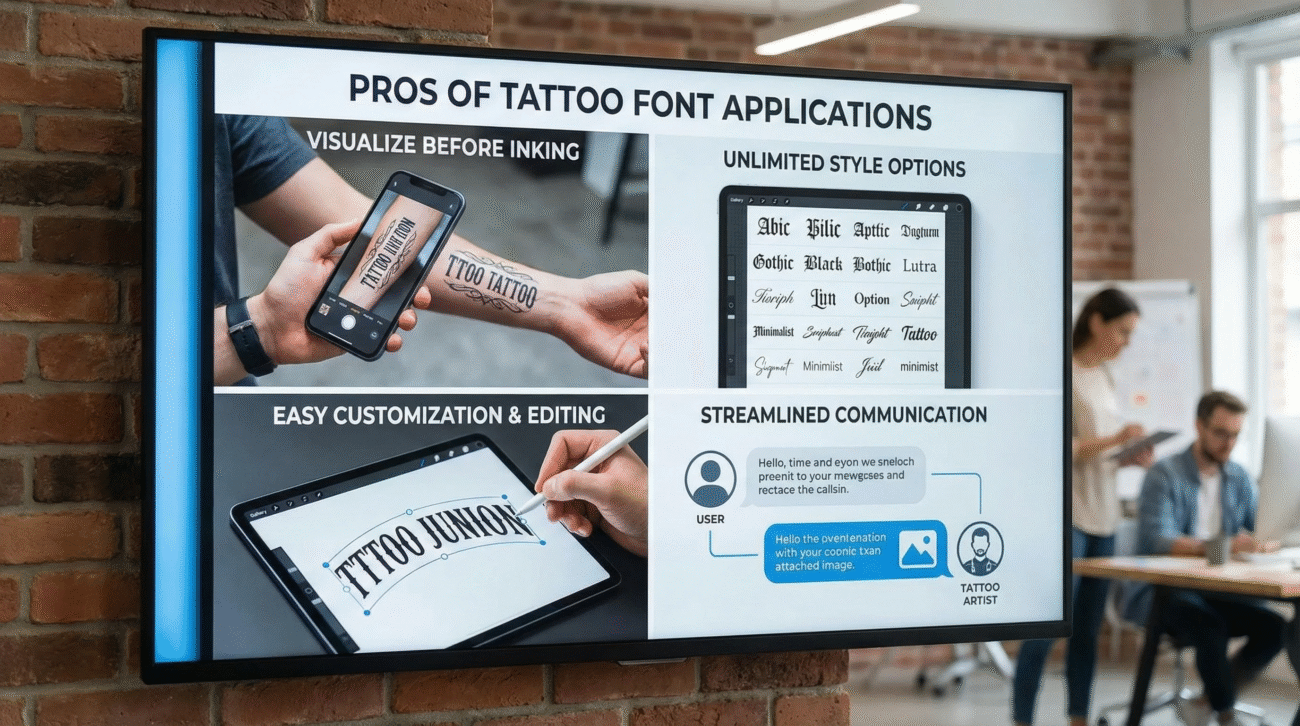
One of the biggest advantages of a tattoo font application is the ability to preview how a tattoo will look before actually committing to it. Users can see the text in different fonts, sizes, and placements on virtual skin or even on their own body using AR tools. This reduces uncertainty and ensures the final tattoo matches the user’s expectations. Many people hesitate because of the fear of permanent mistakes, and these apps solve that by giving a clear visual idea in real time.
2. Offers Access to Thousands of Professional Tattoo Fonts
Tattoo font apps provide users with an extensive library of fonts that would otherwise be difficult or expensive to access. These include calligraphy styles, gothic scripts, cursive and handwritten fonts, tribal lettering, brush strokes, signature fonts, and more. Such diversity helps users find the perfect match for their personality, theme, and tattoo meaning. It also prevents the need to scroll endless pages on the internet to find tattoo-friendly fonts.
3. Encourages Creativity and Experimentation
These apps allow users to try various styles, effects, alignments, and combinations instantly. They can adjust spacing, add curves, modify angles, and test countless variations without needing drawing skills. This creative freedom empowers people who may not be good at sketching but still want a unique and expressive tattoo design. Artists also benefit because they can quickly experiment with new styles without having to redraw everything manually.
4. Saves Time for Both Artists and Clients
Tattoo consultations can take hours when clients and artists brainstorm lettering styles. Tattoo font applications simplify this process by offering ready templates and previews. Clients can come to the studio with a finalized design, or artists can quickly generate concepts within the app. This reduces preparation time, speeds up the design process, and improves appointment flow for busy tattoo studios.
5. Supports Better Communication Between Artist and Client
Miscommunication about tattoo style, font readability, size, or spacing is a common problem in tattoo design. Tattoo apps eliminate this issue by showing an exact digital preview. Clients can express preferences with clarity, and artists can provide accurate feedback, ensuring both sides agree on the final design. This leads to better collaboration and fewer misunderstandings during the actual tattooing session.
6. Affordable Alternative to Professional Design Software
Graphic design tools like Adobe Illustrator or CorelDRAW can be expensive and require advanced skills. Tattoo font applications offer many of the same text design features at little to no cost. Players, hobbyists, or people planning a single tattoo can create high-quality designs without hiring designers or purchasing expensive tools.
7. Allows Sharing and Saving Designs Easily
Users can save high-resolution tattoo designs, export them as images, and share them directly with artists, friends, or social media. This makes it easy to collect feedback, compare styles, or build a portfolio of tattoo ideas. Tattoo artists can also save frequently used designs and templates to speed up future projects.
8. Includes AR and Virtual Try-On Features
Modern tattoo font apps use augmented reality to project a tattoo directly onto the user’s body through their phone camera. This gives an extremely realistic preview—something impossible with traditional paper sketches. Users can move, tilt, or rotate their body and still see the tattoo in real time. This enhances decision-making and boosts confidence in the final design.
Cons of Tattoo Font Applications
1. Limited Font Realism Compared to Actual Tattoo Ink
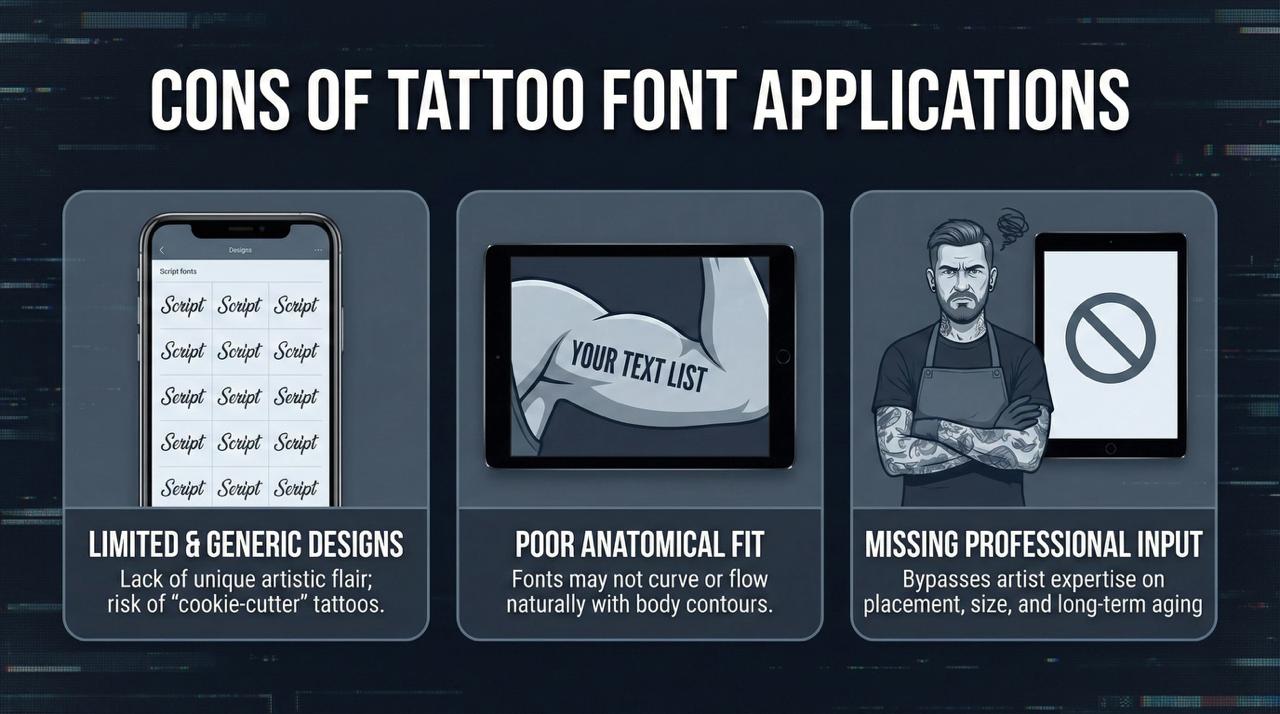
Even though apps offer realistic previews, the final tattoo on real skin may differ slightly. Skin texture, tone, ink absorption, tattoo needle depth, and healing can change how a font appears. What looks perfect digitally may look thinner, thicker, or slightly distorted on actual skin. This means apps cannot guarantee a 100% accurate result in real-world tattooing.
2. May Not Fully Capture Complex Calligraphy Styles
Some detailed calligraphy, brushstroke fonts, or graffiti-style lettering may not translate well in simple apps. They often require manual adjustments, artistic touches, or custom brush effects that only tattoo artists can perfect. Therefore, users might feel limited if they want very intricate or artistic lettering beyond what an app’s default tools can handle.
3. Requires Artistic Judgment to Finalize the Best Design
Tattoo font apps can assist in designing, but they cannot replace the creative judgment of an experienced tattoo artist. Placement, spacing, stroke adjustments, and readability are artistic decisions that require human expertise. Relying solely on the app may lead to choosing overly trendy fonts, low-contrast styles, or unreadable scripts that don’t age well.
4. AR and 3D Try-On Features Are Not Always Accurate
AR previews are impressive but can sometimes distort the shape or angle of the tattoo due to camera limitations. Curved body areas like shoulders, ribs, and calves are especially difficult to simulate perfectly. As a result, the tattoo might appear slightly different when actually applied, leading to minor design adjustments during the tattooing session.
5. Free Fonts May Come With Licensing Restrictions
Some apps include free fonts that are not licensed for commercial use. Tattoo artists must be careful when using certain fonts professionally, as they may violate copyright rules if they tattoo a font that requires a paid license. Users need to check licensing terms carefully before finalizing the design.
6. Over-Reliance on Apps May Limit True Creativity
If users depend entirely on digital tools, they may stop exploring unique hand-drawn styles or personalized custom fonts created by tattoo artists. While apps offer convenience, they may limit artistic exploration if users always select premade fonts instead of experimenting with original, custom art.
7. Paid Features or Subscriptions Can Be Expensive
Many tattoo font applications offer basic tools for free but charge for premium fonts, effects, or AR features. Over time, these subscriptions can become costly, especially for professional tattoo artists who frequently need high-quality design tools. Not all users are comfortable paying for ongoing features.
8. Device Limitations Can Affect Design Quality
Some low-end smartphones may struggle with rendering high-resolution fonts, AR previews, or large text images. Slow performance, lag, or low display quality might make the preview inaccurate. This limits the usability of tattoo apps for users without powerful devices.
Conclusion
Tattoo font applications have completely transformed the way people design, visualize, and finalize text-based tattoos. What once required hours of sketching, consultations, and trial-and-error can now be accomplished within minutes through advanced digital tools. These apps empower users with thousands of creative fonts, powerful customization features, realistic previews, AI-driven suggestions, and AR try-on technology that brings tattoo ideas to life before a single drop of ink touches the skin. Not only do they make the design process easier and more enjoyable for tattoo enthusiasts, but they also streamline workflow for artists, enhance studio professionalism, and reduce misunderstandings between clients and designers.
While tattoo font applications are incredibly helpful, they are not without limitations—such as AR inaccuracies, licensing restrictions, and the need for artistic judgment beyond technology. Still, when used wisely alongside a skilled tattoo artist’s expertise, they offer the perfect blend of creativity, accuracy, and convenience. As technology continues to evolve with AI, 3D mapping, and virtual body simulation, tattoo font applications will only become more powerful and essential in the tattoo industry. They represent the future of tattoo design—making the entire journey from inspiration to final ink smoother, smarter, and far more personalized than ever before.
Contact Us
We at ITech Solutions are always here to help you bring your ideas to life. Whether you have questions about our services or want to start a new project, we are ready to assist you with expert guidance and support.
Email: hr@itechs.co.in
Phone: +91-7976833560